
Written by: Paul
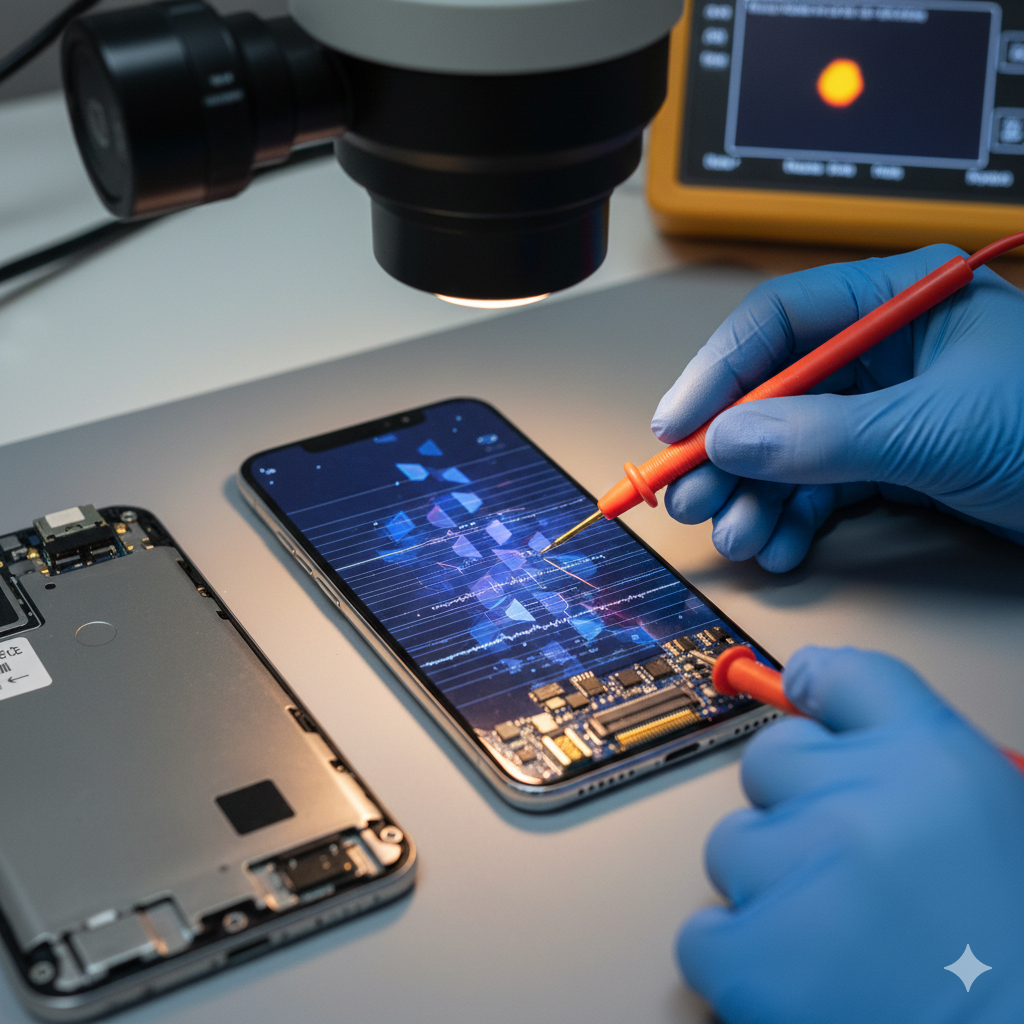
It starts as a subtle pulse. You might notice a faint shimmer in low light. Soon, your high-refresh-rate display begins to “ghost.” It drops frames or shows horizontal lines across your notifications. In the tech industry, we call this the “AI Ghost.” This nickname refers to how modern processors push displays to their limits.
I have spent years diagnosing hardware on the bench. I can tell you that the cause is rarely a simple software bug. When a screen acts possessed, it usually signals a physical power failure. Technical device issues fall under YMYL (Your Money or Your Life) standards. These devices are central to our work and security. Accurate diagnosis is vital to prevent further electrical damage.
Section 1: Understanding the 2026 Display Architecture
Modern smartphone displays are engineering marvels. They require incredibly precise power. Today’s screens rely on a complex link between the GPU and the motherboard’s power chips. In 2026, displays utilize LTPO (Low-Temperature Polycrystalline Oxide) technology. This allows the screen to jump from 1Hz to 120Hz instantly.
A flicker is often a “brownout” at the component level. The screen needs specific voltage to maintain its refresh rate. However, the hardware is failing to provide a steady stream. Many users find that iPhone repair involves more than just swapping glass. It is often about the underlying circuitry that feeds the pixels. If the timing controller (T-CON) loses power for even a millisecond, the image collapses. This results in the strobing effect you see.
Section 2: The Motherboard ‘Voltage Rails’ Explained
To find the root cause, we look at the motherboard’s “voltage rails.” Think of these as dedicated highways for electricity. Every component needs a specific “lane” to stay powered.
The Role of the VDD_Display Rail
The display rail carries a constant voltage to the OLED panel. In 2026 models, AI-driven brightness adjustments cause these rails to fluctuate constantly.
- Capacitor Fatigue: Small capacitors on the board act like tiny batteries. They smooth out electrical noise. Over time, heat causes these to dry out or crack. If one shorts, the power becomes “dirty.” This leads to iPhone screen flickering repair needs.
- Solder Micro-fractures: Modern phones run hot. This heat causes tiny solder balls under the display chip to crack. It creates an “intermittent open” circuit. This means the connection breaks and reconnects hundreds of times per second.
- Inductor Whine and Failure: The coils that boost voltage can also fail. If the inductor cannot hold a magnetic field, the voltage drops. This causes the backlight to dim and brightens rapidly.
- Corrosion: A tiny amount of moisture can bridge high-voltage rails. Even humidity can cause a “leak” between pins. This makes the display stutter as the board tries to protect itself.
If you notice these signs after a drop, it is best to repair a device early. This prevents a total “black screen of death.”
Section 3: Practical Advice for a Flickering Screen
Don’t panic if your screen is flickering, but do not ignore it. Motherboard issues are progressive. They often get worse over time until the device no longer boots.
Step 1: Rule Out the Software
Perform a hard reset. Watch the screen during the boot-up logo. Is the logo flickering? If yes, the issue is hardware. Software cannot affect the screen during the initial boot sequence.
Step 2: Manage Your Heat
High heat makes flickering worse. If your phone is hot, let it cool down. Remove any thick cases that trap heat near the logic board. Heat expands the metal, which can temporarily worsen solder cracks.
Step 3: Seek Professional Diagnostics
2026 displays use high-density connections. DIY repairs often tear delicate cables. You can contact us to have a technician test your power rails. We use thermal cameras to find “hot spots” on the motherboard. This tells us exactly which capacitor has failed.
For larger screens, tablet repair follows a similar logic. Larger devices have more rails. They require even more power to keep the backlight stable. Professional board work is the only way to ensure a lasting fix.
Section 4: Conclusion and Final Thoughts
The “AI Ghost” means the bridge between your phone’s brain and its face is under stress. Flickering is a cry for help from your hardware. It is usually a symptom of a deeper electrical struggle on the motherboard.
At iGenius Phone Repair, we value transparency. We want you to understand how your device works. Understanding why your tech fails helps you make better decisions. If you need help, stop by a location near you. You can also read more about us and our commitment to precision repair. Don’t let a small flicker turn into a dead device.
FAQs
Can a software update fix screen flickering?
It only helps if the flicker is caused by a driver bug. If it appears during the boot logo, it is a hardware problem on the logic board.
Is it safe to use a flickering phone?
It is not recommended. Unstable voltage can cause a short circuit. This may damage the CPU or cause permanent data loss.
How much does it cost to fix an iPhone screen?
Costs depend on the specific damage. Sometimes it is the screen; other times it is the board. You can get an instant quote online for your model.
Disclaimer: This information is for educational purposes only. Handling internal phone parts involves risks of shock and device damage. We recommend consulting a certified technician for all hardware modifications.