
Written by: Paul
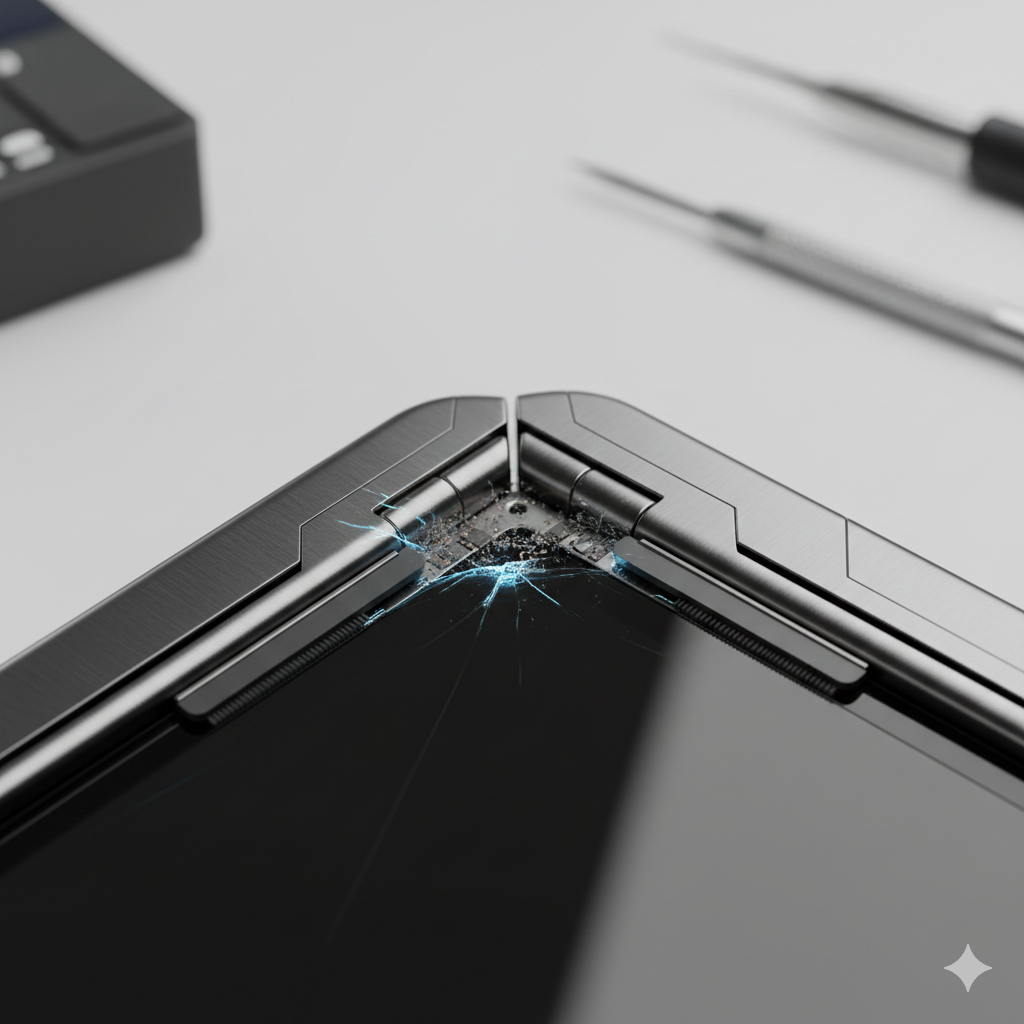
If you invested in a new foldable this year, you likely feel a bit of “crease anxiety.” Manufacturers promised “gapless” hinges for 2026, yet we see a surge in 2026 foldable screen cracks. From my perspective at the repair bench, even tiny debris can ruin an expensive flagship. This technology holds your banking and identity data. Because it is YMYL (Your Money or Your Life) tech, you must understand these structural risks. Protecting your investment starts with knowing why these screens fail.
Section 1: The Invisible Enemy — Micro-Dust and Internal Abrasion
Microscopic debris is the main cause of the current “Hinge Gap Crisis.” It isn’t just a glass durability issue. Despite improved “sweeper” bristles, micro-dust still gets inside. This dust includes silica and fine fibers.
Once inside the hinge, these particles act like sandpaper. They rub against the ultra-thin display layer. In 2026, slimmer designs have left very little room for error. Tiny particles now cause major pressure points. If you hear a “crunchy” sound, contact us quickly. Early intervention prevents total pixel failure.
Section 2: Polyimide Fatigue — Why Screens Fail Over Time
Foldable screens use complex layers of Ultra Thin Glass (UTG) and colorless polyimide. Labs test these materials for thousands of folds. However, real-world use introduces heat and humidity. These variables change everything.
The Science of “Crease Memory”
Over time, polyimide layers undergo molecular stress. This “fatigue” makes the material brittle. It often leads to a black line down the center. We notice that users who repair a device for minor hinge stiffness often save their screens. Addressing mechanical tension early is key.
Environmental Factors
- Cold Weather: Low temperatures make internal adhesives stiff. This increases the risk of 2026 foldable screen cracks.
- Pocket Lint: Fabric fibers work into the hinge while the phone is closed.
Section 3: Practical Advice to Protect Your Foldable
A 2026 foldable requires a different maintenance routine than a standard phone. Repairs are expensive, so prevention is your best tool.
- Close It Carefully: Do not press your thumb directly onto the crease. Always close the device from the outer edges.
- Use an Air Blower: Use a soft manual air blower to clear the hinge weekly. Avoid high-pressure canned air.
- Check for Flickering: If you see a flickering line, act fast. You can get an instant quote to check repair costs before the screen dies.
- Professional Help: Foldable tech is very delicate. Never try a DIY hinge cleaning. Visit us for an iPhone repair or foldable diagnostic instead.
Section 4: Conclusion and Final Thoughts
Foldable technology is a leap forward, but it has a physical shelf life. The 2026 foldable screen cracks we see today prove that physics still wins. Environmental wear and micro-dust are real threats. However, staying vigilant can extend your phone’s life.
At iGenius Phone Repair, we prioritize your device’s health. Visit our about us page to see our history with high-end tech. From tablet repair to foldables, we keep your tech running longer.
FAQs
Why does my foldable make a popping noise?
A popping sound means the internal sweepers are catching on dust. It often signals that the display adhesive is lifting.
Can I fix a folding screen crack myself?
No. These displays are factory-bonded. You must replace the entire assembly if the panel cracks.
How do I keep dust out of the hinge?
Keep your pockets clean and use a protective pouch. Avoid using the phone in sandy or very dusty environments.
Disclaimer: This content provides hardware information only. Foldable screens contain delicate, high-voltage parts. We recommend a professional inspection for any mechanical or display issues.